Kip’s Comments - February 10, 2026
Photography Tip - Position For Impact
For many years I studied images in National Geographic magazines - one publication where with a single photo much impact could be created - often without written words. Frequently those observations will swirl in the back of my head as I study scenes - how can I compose a scene to create visual impact?
This afternoon, while hiking, I came across several clumps of whitetail deer hair. Seeing the hair led me to believe I was near a carcass and the hair was either blowing from the death scene or being carried by scavengers. With little effort I found what remained of the dead deer - a young buck. I quickly recognized an opportunity for a photography teaching/learning moment.
My first photo was composed as I suspect many people would… hold the camera at eye level, frame up the remains, and press the shutter release button.
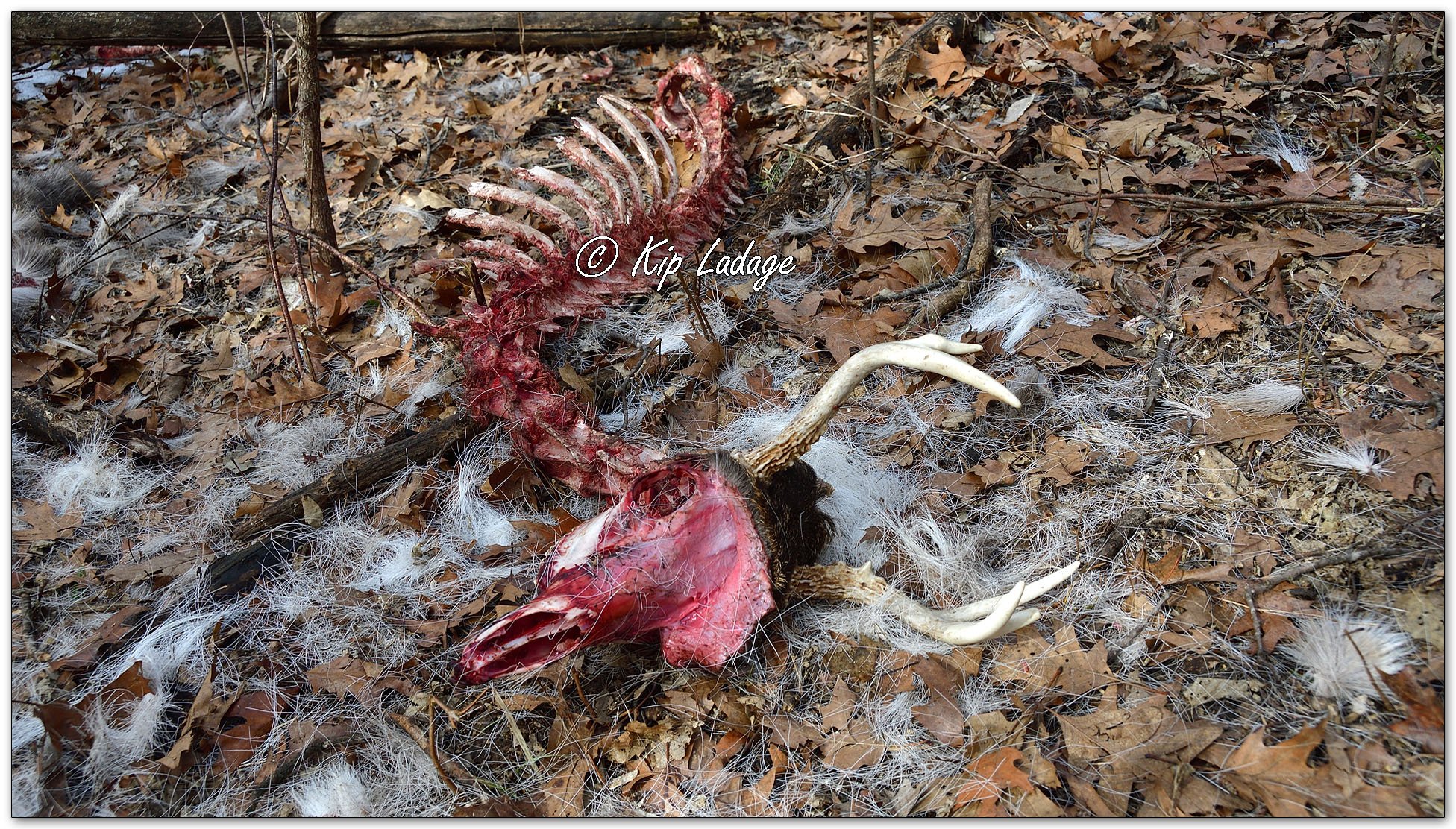
Whitetail Deer Carcass - Image 1063541
Then I decided to create an image with impact. How could I do that? By composing the scene with the deer skull, pink underside of the hide, and antlers close with the background falling out of focus. Yes, less of the skeleton is visible. But, with the ribs partially visible, viewers can readily complete the necessary elements that tell this story.
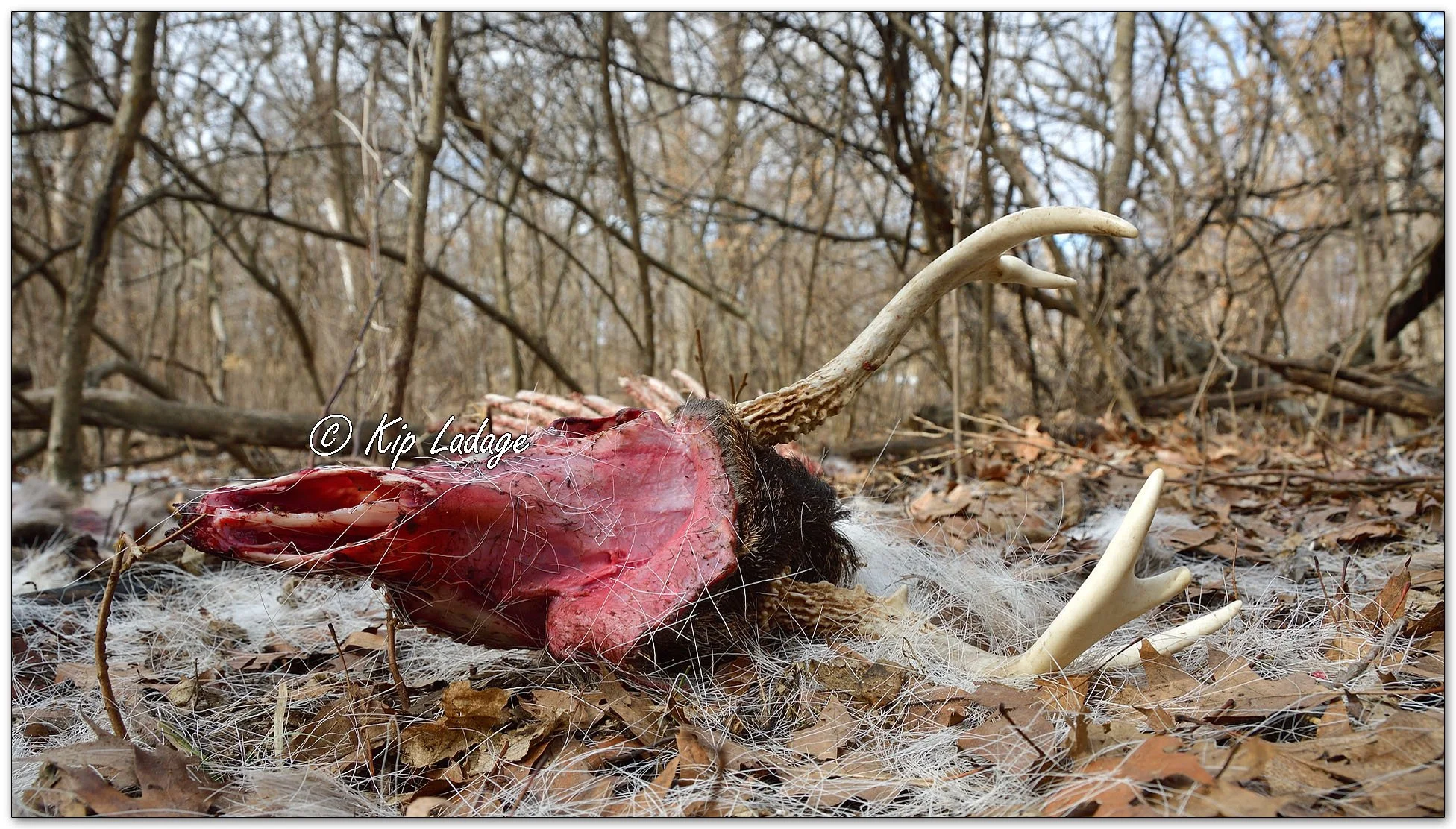
Whitetail Deer Carcass - Image 1063589
Both images convey the same message, “I found a dead deer.” The first view makes a generic statement while the second image delivers that message with impact - almost an “in your face” view of “I found a dead deer.”
Later in my hike I found what appeared to be an opossum skull. I used the same positioning technique on this composition to emphasize the skull. The attention-getting pink color was absent, but the message was still the same - “I found a skull!”
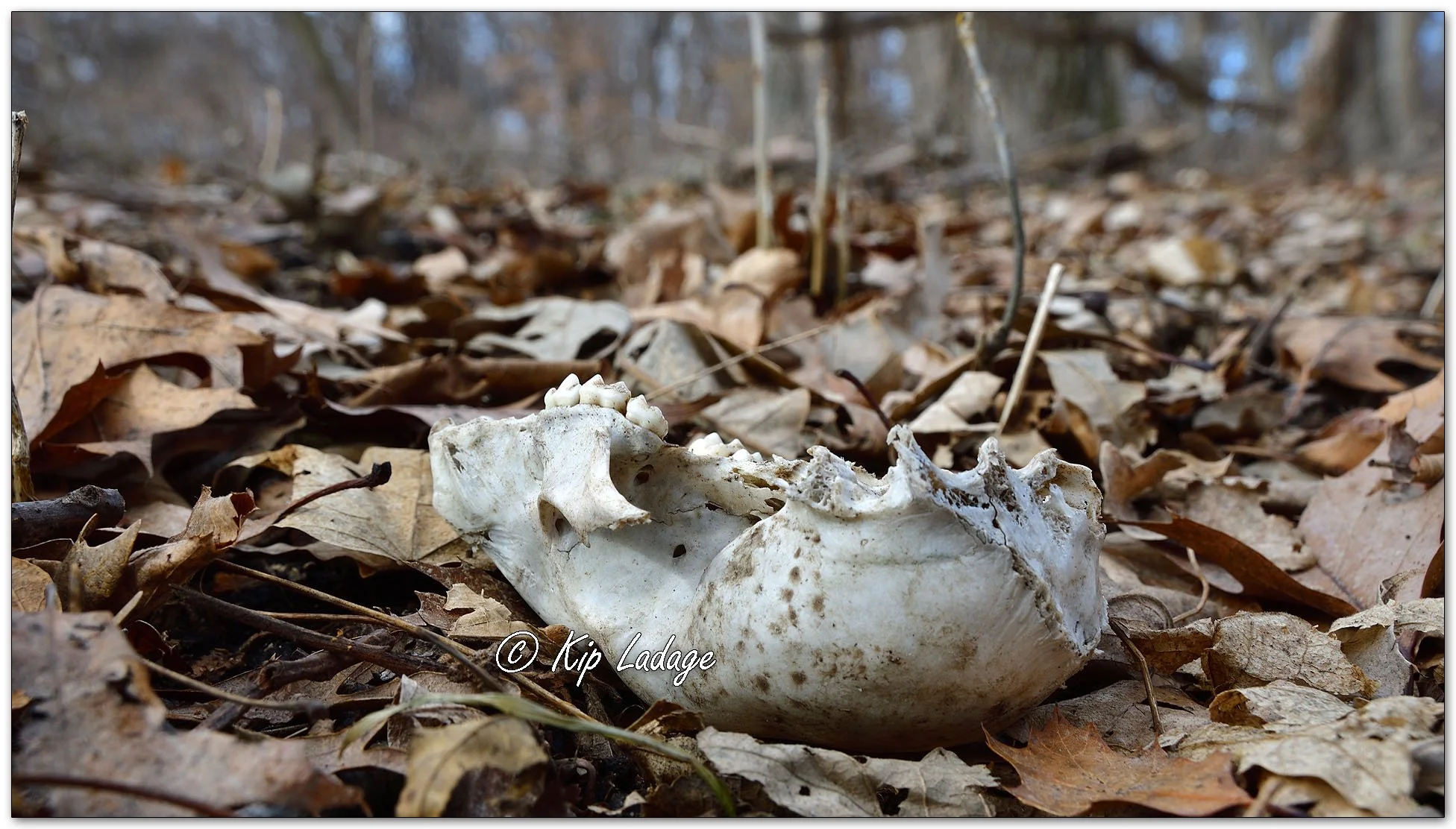
Possible Opossum Skull - Image 1063512
Ironically, both skull photos tell the same story, but the one with color really drives the point home.